


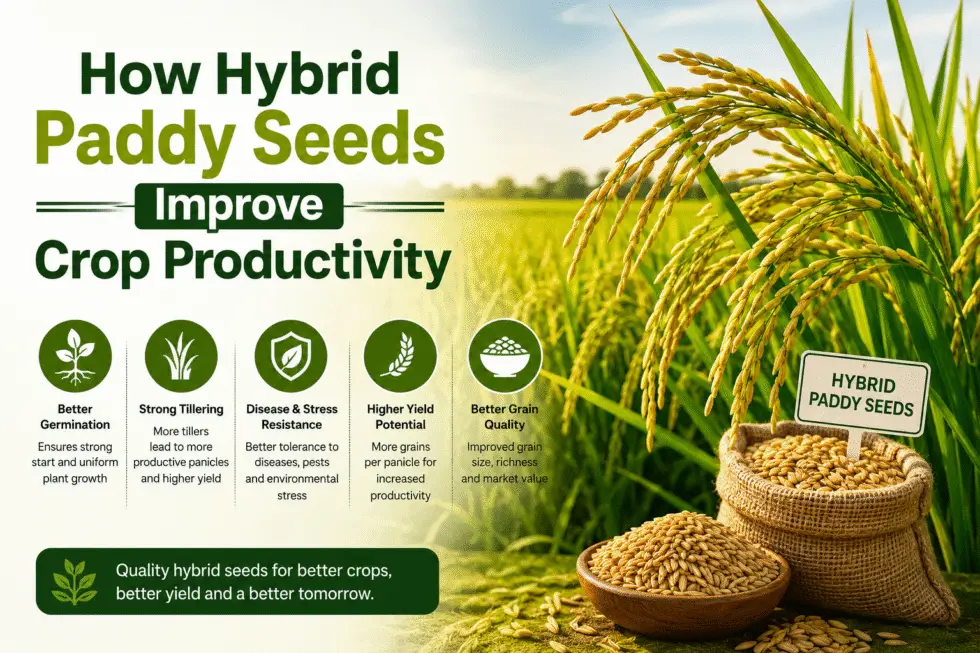
Paddy farming plays a major role in Indian agriculture, and farmers are constantly looking for ways to improve crop productivity and grain quality. One of the biggest advancements in modern rice farming is the use of hybrid paddy seeds. Compared to traditional seed varieties, hybrid seeds are developed to deliver better yield potential, stronger plant growth, and improved resistance against environmental stress.
Understanding how hybrid paddy seeds improve crop productivity can help farmers make smarter decisions before sowing season and achieve better farming results.
Why Hybrid Paddy Seeds Are Important in Modern Farming
Hybrid paddy seeds are developed through controlled breeding techniques to combine desirable crop characteristics. These seeds are widely used because they support stronger crop performance under different farming conditions.
Farmers prefer hybrid paddy seeds because they may help with:
- Higher yield potential
- Better tillering capacity
- Improved grain quality
- Stronger crop growth
- Better adaptability to seasonal conditions
With changing climate patterns and increasing farming challenges, seed quality has become one of the most important factors influencing crop productivity.
How Hybrid Paddy Seeds Improve Crop Productivity in Different Farming Conditions
Crop productivity depends on several factors including seed quality, soil condition, irrigation, and weather. However, the right paddy seed variety creates a strong foundation for healthy crop development.
Better Germination and Early Plant Growth
Healthy germination is essential for maintaining uniform crop growth across the field. Hybrid paddy seeds are often selected for better seed vigor, which supports strong early-stage development.
Good plant establishment helps farmers maintain balanced crop growth throughout the season and reduces the chances of weak crop patches.
Strong Tillering Improves Yield Potential
Tillering refers to the production of side shoots in paddy crops. More productive tillers generally contribute to better grain production.
Hybrid varieties are commonly preferred because of their stronger tillering capacity, which may help improve overall crop productivity under proper farming management.
Improved Resistance to Environmental Stress
Weather conditions such as excess rainfall, humidity, and temperature fluctuations can affect rice farming significantly.
Many hybrid paddy varieties are developed to perform better under challenging seasonal conditions. Stronger crop tolerance helps farmers reduce production risks and maintain healthier fields during the Kharif season.
Importance of Choosing the Right Hybrid Paddy Variety
Not all paddy varieties perform the same in every region. Farmers should always select seeds according to:
- Local climate conditions
- Water availability
- Soil type
- Crop duration requirements
- Disease management needs
Choosing suitable hybrid seeds according to farming conditions improves the chances of better crop performance and grain quality.
Popular Hybrid Paddy Seed Options
Choosing the right hybrid paddy seed variety plays an important role in improving crop growth and overall field performance. Farmers preparing for the Kharif season often look for seed varieties that support healthy plant development, strong tillering, and better productivity under different farming conditions.
Popular options such as Rasi 4007 Paddy Seeds and Pioneer 27P37 Paddy Seed are commonly preferred by farmers for seasonal paddy cultivation and improved crop management.
Proper Crop Management Still Matters
Although hybrid seeds offer several advantages, productivity also depends on proper farming practices.
Essential Farming Practices for Better Productivity
Farmers should focus on:
- Timely sowing
- Balanced fertilizer application
- Proper irrigation management
- Weed control
- Disease and pest monitoring
Using quality seeds together with proper crop management improves the chances of achieving healthy crop growth and better harvest quality.
Weather and Seasonal Conditions Affect Paddy Productivity
Rice farming is highly influenced by monsoon conditions. Excess water, drought, or humidity-related diseases may affect crop development during different stages.
Hybrid paddy seeds may help farmers manage some seasonal farming challenges more effectively due to their stronger adaptability and crop vigor.
However, local farming knowledge and timely field monitoring remain important throughout the growing season.
Why Farmers Are Moving Toward Hybrid Paddy Farming
Many farmers are gradually shifting toward hybrid paddy cultivation because of increasing demand for higher productivity and better crop efficiency.
Modern agriculture now focuses more on:
- Efficient land use
- Higher production per acre
- Better grain quality
- Sustainable farming practices
Hybrid seeds are becoming an important part of this agricultural transition.
Google’s recent helpful content updates also encourage practical, experience-focused agricultural information that genuinely helps users understand farming decisions instead of relying on overly promotional content. Farmers today prefer educational guidance that supports real agricultural needs.
Conclusion
Understanding how hybrid paddy seeds improve crop productivity helps farmers make informed decisions before the farming season begins. Better germination, strong tillering, healthier crop growth, and improved adaptability make hybrid seeds an important part of modern rice farming.
When combined with proper irrigation, balanced nutrition, and good field management, hybrid paddy varieties can support better farming productivity and crop quality over time.
Farmers looking for hybrid paddy seed options and agricultural solutions can explore products available at Shramik Krishi Kendra.