


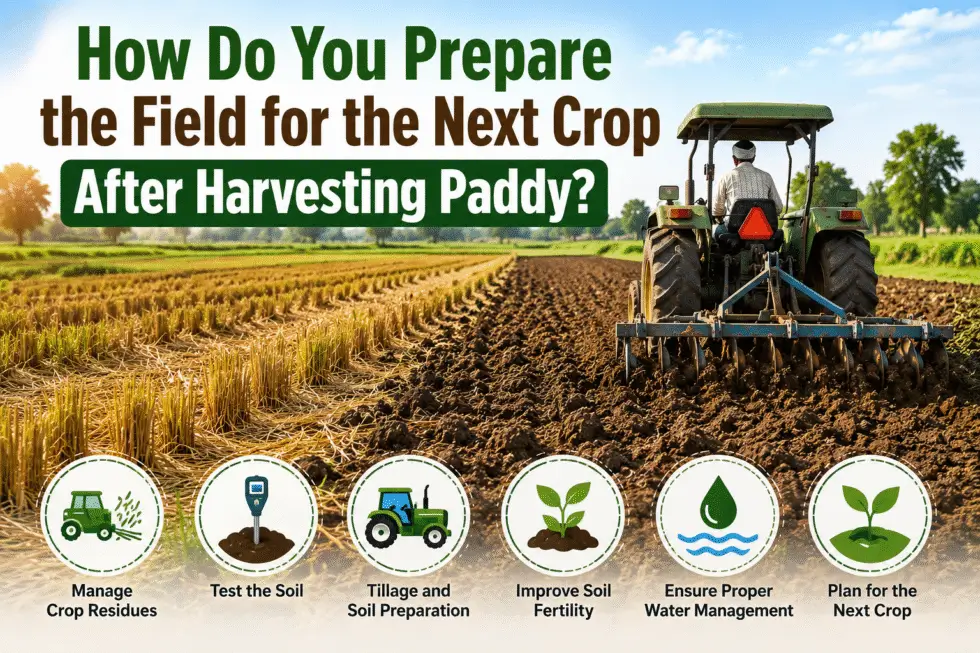
Paddy harvesting marks the end of one cropping season and the beginning of another. Proper field preparation after harvesting paddy is essential for maintaining soil fertility, reducing pest problems, and ensuring better crop establishment for the next season. Many farmers focus only on harvesting, but the steps taken afterward can significantly impact the yield and quality of the upcoming crop.
Whether you plan to grow wheat, vegetables, pulses, or fodder crops, preparing the field correctly helps create ideal growing conditions. With quality inputs available through an online agriculture store in India, farmers can easily access the products needed for successful post-harvest field management.
Why Field Preparation After Paddy Harvest Is Important
After paddy harvesting, the field often contains crop residues, weeds, and compacted soil. If these issues are not addressed, they can affect seed germination, nutrient availability, and crop growth. Proper field preparation helps:
- Improve soil structure and aeration
- Enhance water retention and drainage
- Reduce pest and disease carryover
- Improve nutrient availability
- Ensure better seed germination and crop establishment
Taking the right steps after harvest lays a strong foundation for the next cropping cycle.
Remove or Manage Paddy Residues
One of the first tasks after harvesting paddy is managing the leftover straw and stubble. Instead of burning crop residues, which can damage soil health and contribute to environmental pollution, farmers should adopt sustainable residue management practices.
Benefits of Proper Residue Management
- Increases organic matter in the soil
- Improves soil microbial activity
- Reduces nutrient loss
- Enhances moisture retention
Crop residues can be incorporated into the soil using agricultural implements or converted into compost for future use.
Conduct Soil Testing
Before sowing the next crop, it is important to understand the nutrient status of the field. Soil testing helps determine deficiencies and allows farmers to apply fertilizers based on actual crop requirements.
Key Soil Parameters to Check
- Nitrogen levels
- Phosphorus availability
- Potassium content
- Soil pH
- Organic carbon percentage
A soil test report helps farmers avoid unnecessary fertilizer expenses and promotes balanced nutrient management.
Prepare the Soil Through Proper Tillage
Tillage plays a vital role in breaking soil compaction created during paddy cultivation. It improves aeration, root penetration, and moisture movement.
Primary Tillage
Primary tillage involves deep ploughing to loosen compacted soil layers and incorporate crop residues.
Secondary Tillage
Secondary tillage helps create a fine seedbed suitable for sowing the next crop. This process ensures uniform seed placement and better germination.
The level of tillage may vary depending on the crop to be planted and the soil conditions of the field.
Control Weeds Before Sowing
Weeds compete with crops for nutrients, water, and sunlight. After paddy harvest, weed seeds may remain in the soil and germinate quickly.
Effective Weed Management Practices
- Mechanical removal
- Shallow cultivation
- Mulching
- Timely herbicide application when necessary
Managing weeds before planting reduces competition during the early growth stages of the next crop.
Improve Soil Fertility
The nutrient demand of paddy can leave the soil depleted after harvest. Replenishing nutrients is essential for maintaining soil productivity.
Organic Amendments for Better Soil Health
Farmers can improve soil fertility by adding:
- Farmyard manure (FYM)
- Vermicompost
- Green manure
- Biofertilizers
These organic inputs enhance soil structure, improve microbial activity, and support long-term sustainability.
Ensure Proper Water Management
Water management requirements differ depending on the next crop. After paddy cultivation, fields may have uneven moisture levels that need correction.
Steps for Better Water Management
- Level the field properly
- Repair drainage channels
- Remove excess standing water
- Plan irrigation according to crop requirements
Proper water management prevents waterlogging and supports healthy root development.
Select High-Quality Seeds and Inputs
The success of the next crop depends largely on the quality of seeds and agricultural inputs used. Farmers should choose certified seeds that are suitable for local climate and soil conditions.
Today, many farmers prefer to buy agriculture products online because it provides access to a wide range of seeds, fertilizers, crop protection products, and farming essentials from trusted suppliers. Purchasing from reliable sources ensures quality and authenticity.
Plan Crop Rotation for Better Productivity
Crop rotation is an effective strategy for improving soil health and reducing pest and disease pressure. Instead of growing the same crop repeatedly, farmers can alternate with legumes, vegetables, or fodder crops.
Advantages of Crop Rotation
- Improves nutrient utilization
- Breaks pest and disease cycles
- Enhances soil fertility
- Increases overall farm productivity
A well-planned crop rotation system contributes to sustainable farming and long-term profitability.
Conclusion
Preparing the field properly after harvesting paddy is one of the most important steps for achieving a successful next crop. From residue management and soil testing to nutrient replenishment and water management, every stage contributes to improved soil health and higher yields. Farmers who invest time in post-harvest field preparation can maximize productivity while maintaining long-term soil fertility. For quality seeds, fertilizers, and farming essentials, farmers can explore trusted solutions through Shramik Krishi Kendra, a reliable destination to buy agriculture products online from an established online agriculture store in India.