


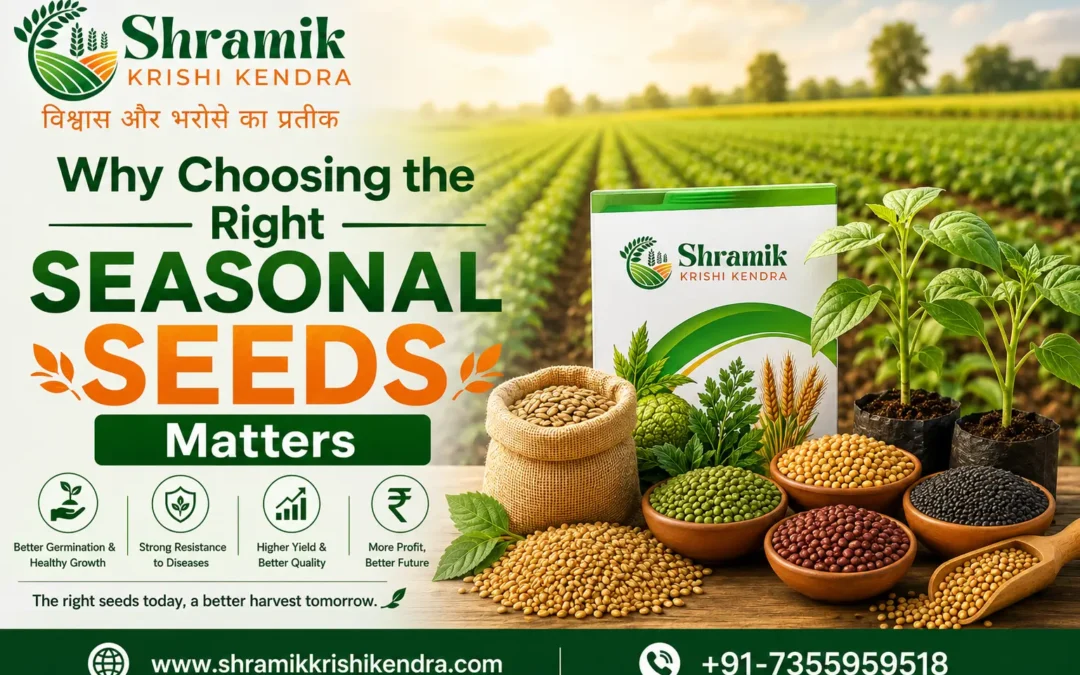
Choosing the right seeds is one of the most important decisions a farmer makes before starting a crop cycle. The quality and suitability of seeds can influence germination, plant growth, crop uniformity, resistance to environmental conditions, and ultimately the expected harvest. Selecting seeds according to the season, soil, climate, and farming conditions helps farmers make better use of land, water, labour, and other agricultural inputs.
The right seasonal seeds are not simply about choosing a high-yielding variety. Farmers also need to consider whether a particular seed is suitable for their region and the conditions in which the crop will be grown. This becomes especially important when planning seasonal farming in India, where temperature, rainfall, soil conditions, and crop cycles can vary considerably.
Why Choosing the Right Seasonal Seeds Matters
The right seasonal seeds can provide a stronger foundation for successful crop production. Seeds selected according to the recommended growing season are more likely to establish properly when temperature, moisture, and other environmental conditions are suitable.
Good seed selection can help farmers achieve:
- Better and more uniform germination
- Healthy early plant growth
- Improved crop establishment
- More consistent crop development
- Efficient use of water and nutrients
- Better potential for quality harvests
Seed selection should therefore be considered part of the overall crop planning process rather than an isolated purchasing decision.
How Seasonal Seeds Affect Crop Growth
Better Germination and Crop Establishment
Germination is the first major stage of crop development. Seeds require suitable temperature, moisture, soil conditions, and depth to germinate effectively. When farmers select varieties appropriate for their growing season, they can create better conditions for uniform crop establishment.
Uneven germination may result in gaps in the field and differences in plant maturity. This can make irrigation, nutrient management, pest monitoring, and harvesting more difficult.
Improved Adaptation to Weather Conditions
Different crops and varieties perform differently under different weather conditions. Selecting seeds suited to the local growing period can help farmers manage the challenges associated with temperature changes, rainfall patterns, and moisture availability.
For example, farmers planning a paddy crop need to consider the appropriate variety for their local conditions rather than selecting seeds only because they are popular. Those planning other seasonal crops should similarly evaluate the recommended sowing period and environmental requirements.
Better Use of Farm Resources
Seed selection also affects how efficiently farmers use their available resources. A suitable crop variety can help farmers plan irrigation, fertilization, labour, and crop protection more effectively.
For farmers looking to buy paddy seeds online, it is important to check the variety, crop duration, growing conditions, and recommended region before placing an order.
Factors to Consider When Selecting Seasonal Seeds
Understand Your Local Climate
Temperature and rainfall play an important role in determining crop performance. Before selecting seeds, farmers should understand the conditions normally experienced during the intended growing period.
A variety suitable for one region may not necessarily provide the same results in another. Local climate, sowing window, and water availability should therefore be considered together.
Check Soil Type
Soil characteristics can influence root development, nutrient availability, drainage, and overall plant growth. Farmers should consider whether their soil is suitable for the selected crop and variety.
A simple understanding of soil texture, drainage, fertility, and pH can help farmers make more informed seed choices.
Consider Crop Duration
Crop duration is another important factor. Short-duration varieties may be useful when farmers have a limited growing window or want to fit another crop into their rotation. Longer-duration varieties may be appropriate when environmental and water conditions support a longer crop cycle.
Farmers should compare the expected crop duration with their available growing period before making a decision.
Focus on Seed Quality
Seed quality is equally important. Farmers should purchase seeds from reliable sources and check packaging, variety information, batch details, and other available product information.
The same principle applies when selecting vegetable seeds, where crop variety, growing season, local climate, and expected harvest characteristics should all be considered.
The Role of Seasonal Seeds in Profitable Farming
Choosing suitable seeds can contribute to better farm planning and potentially improve overall profitability. When crops establish uniformly and develop under suitable conditions, farmers may be able to manage their fields more efficiently.
However, seed selection alone does not guarantee a particular yield. Crop performance also depends on soil preparation, irrigation, nutrition, weed management, pest and disease control, weather, and proper farming practices.
Farmers should therefore consider seeds as one part of a complete crop management strategy.
Why Reliable Sources Matter When Buying Seeds
Farmers increasingly use digital platforms to purchase agricultural products online, making it easier to compare products and access farming inputs. However, convenience should always be combined with careful product selection.
Before purchasing, check the product name, seed variety, pack size, crop suitability, and available product information. Buying from a reliable agriculture-focused store can also make it easier to find different categories of seeds and farming inputs in one place.
For farmers who prefer to buy agriculture products online, choosing a platform that provides clear product information can simplify the purchasing process and support better decision-making.
Common Mistakes to Avoid
Farmers can avoid several common mistakes by planning seed purchases before sowing:
- Choosing seeds only because they are inexpensive
- Ignoring local weather and soil conditions
- Selecting a variety without checking its crop duration
- Buying from unreliable sources
- Not checking seed packaging and product information
- Selecting varieties without considering market requirements
Careful planning before purchase can reduce avoidable problems during the crop cycle.
Conclusion
Choosing the right seasonal seeds is an important step toward building a productive and well-managed crop. Farmers should consider climate, soil, water availability, crop duration, seed quality, and local growing conditions before selecting a variety.
Rather than choosing seeds based only on price or popularity, farmers should select varieties that match their specific farming requirements. With thoughtful planning and suitable agricultural practices, the right seed selection can provide a stronger starting point for healthy crop establishment and efficient farm management.
For farmers looking for seasonal crop varieties, the Seasonal Crops category offers options that can be explored according to their crop planning requirements.