


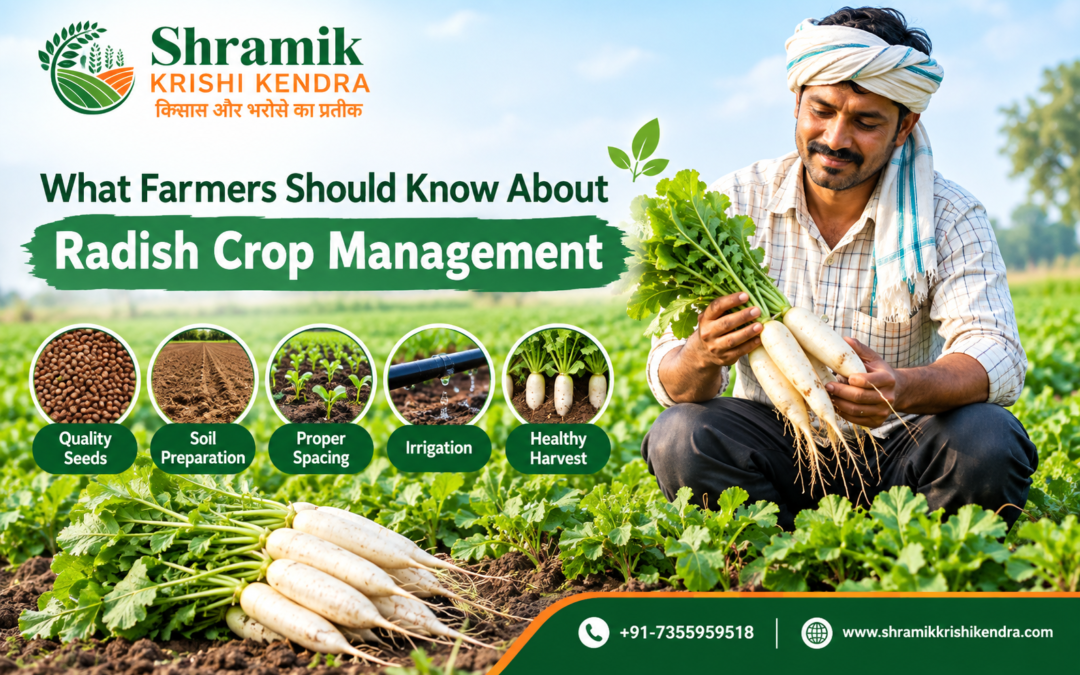
Radish is a fast-growing root vegetable that can provide a useful crop when managed properly. From selecting suitable seed to preparing the soil, irrigation, thinning, weed control, and harvesting, each stage can influence root quality and overall crop performance. Choosing a suitable Hybrid Radish Seed is an important first step, but proper crop management is equally essential for achieving uniform growth and quality roots.
Hybrid Radish Seed Selection and Crop Planning
Choosing the right seed variety should be based on factors such as local growing conditions, soil type, crop duration, root characteristics, and market requirements. Good-quality seed can support better germination and uniform crop establishment.
Farmers should also check the seed packet carefully for variety information, recommended growing conditions, seed quality details, and sowing recommendations. Buying from a reliable seeds dealer can help farmers select suitable varieties according to their cultivation requirements.
Soil Preparation for Better Radish Growth
Radish develops underground, so loose and well-prepared soil is particularly important. Hard or compacted soil can restrict root expansion and may affect the shape and size of the harvested roots.
Before sowing, remove stones, weeds, and large soil clods. Fine soil preparation helps create a suitable seedbed and allows young roots to develop more freely. Well-drained soil is also important because excessive moisture can negatively affect root development.
Organic matter can be incorporated into the soil according to local farming practices and soil requirements. Farmers should avoid excessive nitrogen application because it can encourage leafy growth rather than balanced root development.
Sowing and Spacing of Hybrid Radish Seed
Proper sowing depth and spacing can help plants receive sufficient space, moisture, nutrients, and sunlight. Radish seeds are generally sown directly into the prepared field rather than transplanted.
A Hybrid Radish Seed should be sown according to the recommendations provided for the particular variety. Overcrowding can result in competition between plants and may lead to smaller or poorly developed roots.
Once seedlings emerge, thinning can be carried out where plants are too close together. Maintaining suitable spacing allows individual plants to develop their roots with less competition.
Irrigation and Moisture Management
Consistent moisture is important throughout the early stages of radish growth. Farmers should monitor the soil regularly and irrigate when necessary rather than allowing the crop to experience repeated cycles of excessive dryness and excessive moisture.
Uneven watering can affect root development and may contribute to quality problems. At the same time, over-irrigation should be avoided, particularly in poorly drained fields.
Irrigation requirements can vary according to soil type, weather conditions, crop stage, and local cultivation practices.
Weed and Nutrient Management
Weeds compete with radish plants for water, nutrients, sunlight, and growing space. Early weed management is therefore important, particularly while plants are still establishing.
Farmers should monitor the field regularly and remove weeds using suitable mechanical or cultural methods. Nutrient management should be based on soil conditions and crop requirements rather than applying fertilizers excessively.
Balanced nutrition can support healthy foliage and root development. Soil testing, where available, can help farmers make more informed fertilizer decisions.
Hybrid Radish Seed and Root Development
Good crop management helps a Hybrid Radish Seed reach its production potential. Farmers should regularly observe plant growth, root development, soil moisture, and signs of pest or disease problems.
If unusual symptoms appear, early identification can help farmers take appropriate corrective measures. Maintaining field cleanliness, suitable spacing, proper irrigation, and balanced nutrition can contribute to healthier crop development.
Farmers can also explore reliable sources through an online agriculture store india when looking for suitable seeds and agricultural inputs for their cultivation needs.
Harvesting Radish at the Right Stage
Harvest timing plays an important role in maintaining root quality. Radishes should generally be harvested according to the maturity characteristics of the selected variety and the desired market size.
Leaving roots in the field for too long can affect tenderness and eating quality in some varieties. Farmers should therefore monitor root size and maturity regularly and harvest when the crop reaches the appropriate stage.
Proper harvesting and gentle handling can also help reduce physical damage and maintain the appearance of fresh roots.
Conclusion
Successful radish cultivation involves more than simply selecting good seed. Farmers need to combine suitable Hybrid Radish Seed selection with proper soil preparation, spacing, irrigation, weed management, balanced nutrition, regular crop monitoring, and timely harvesting. Paying attention to each stage can help support uniform crop establishment and better-quality roots. For farmers planning their next radish crop, Shramik Krishi Kendra provides quality seeds and agricultural products to support informed crop planning and productive cultivation.