

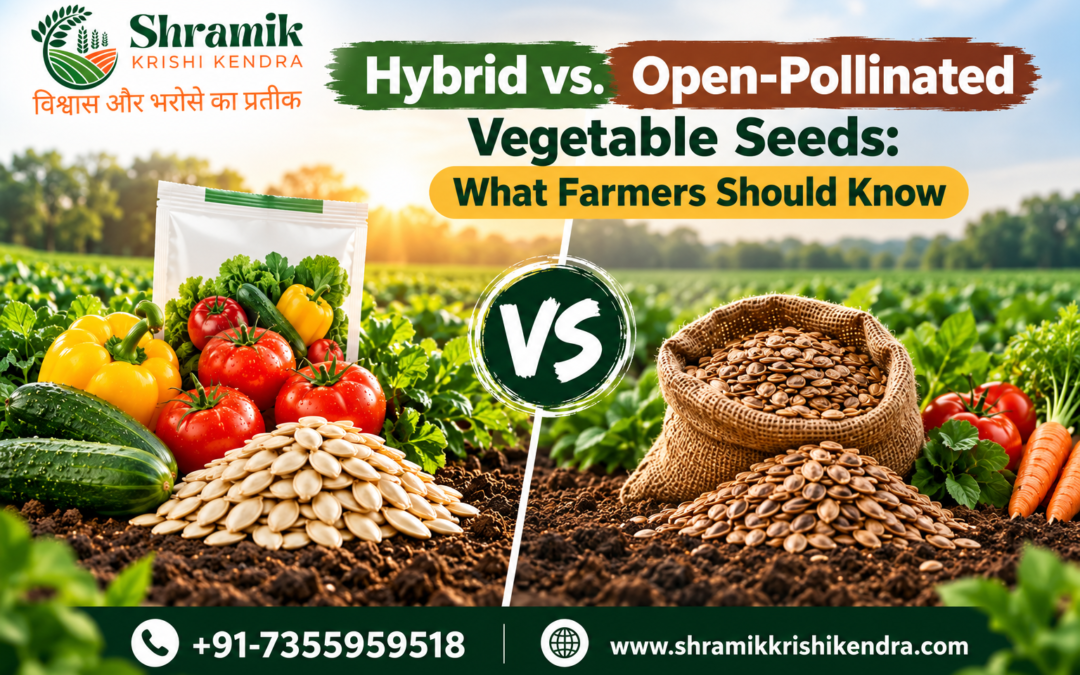
Choosing the right seeds is an important step in successful vegetable farming. Farmers need to consider crop quality, growing conditions, market demand, and production costs before selecting a seed variety. Understanding the difference between Hybrid Vegetable Seeds and open-pollinated seeds can help farmers make informed decisions for their fields.
Both seed types have their own benefits and limitations. The right choice depends on farming goals, available resources, and whether farmers want to save seeds for future cultivation.
What Are Hybrid Vegetable Seeds?
Hybrid seeds are produced by crossing selected parent plants to combine desirable characteristics. These characteristics may include uniform fruit size, improved crop performance, early maturity, or resistance to specific diseases, depending on the variety.
Farmers often consider Hybrid Vegetable Seeds when planning commercial cultivation because uniform produce and consistent crop characteristics can be valuable for harvesting, grading, transportation, and selling in the market.
However, hybrid performance depends on factors such as soil fertility, irrigation, weather, crop management, and the specific variety selected. Farmers should always check the product label and follow the recommended cultivation practices.
What Are Open-Pollinated Vegetable Seeds?
Open-pollinated seeds come from plants that reproduce through natural pollination by insects, wind, or other natural methods. When these plants are grown under suitable conditions and pollination is properly managed, their seeds can generally produce plants with characteristics similar to those of the parent variety.
One major advantage is the possibility of saving seeds for the next growing season. This can help farmers who want greater control over their seed supply and prefer to maintain a particular variety over time.
However, seed saving requires careful selection of healthy plants and proper pollination management. Cross-pollination with other varieties of the same crop can affect the characteristics of future plants.
Hybrid vs. Open-Pollinated Seeds: Key Differences
Understanding the main differences between these seed types can help farmers select varieties that match their production goals.
| Feature | Hybrid Seeds | Open-Pollinated Seeds |
|---|---|---|
| Seed production | Created by crossing selected parent plants | Produced through natural pollination |
| Crop uniformity | Often more uniform, depending on the hybrid | Can show natural variation within a variety |
| Seed saving | Saved seeds may not retain the same characteristics in the next generation | Seeds can generally reproduce the parent variety when properly maintained |
| Initial seed cost | May be higher for some varieties | May be lower for some varieties |
| Commercial farming | Can suit farmers seeking specific crop traits and uniformity | Can suit farmers prioritizing variety preservation and seed saving |
| Selection criteria | Hybrid traits, local suitability, and market demand | Variety stability, local adaptation, and seed quality |
Neither option is automatically better for every farm. Farmers should compare the characteristics of individual varieties rather than making decisions based only on the seed type.
Benefits of Choosing Hybrid Vegetable Seeds
For commercial growers, selecting suitable Hybrid Vegetable Seeds can offer several potential advantages.
1. Uniform Crop Development
Many hybrids are developed to produce plants and vegetables with relatively consistent characteristics. Uniformity can make harvesting, sorting, packaging, and marketing easier.
2. Desirable Market Characteristics
Some hybrid varieties are selected for fruit shape, colour, size, texture, or shelf life. These qualities may be important when selling vegetables to wholesalers, retailers, or local markets.
Farmers should compare the variety’s documented characteristics with the preferences of their intended buyers before making a purchase.
3. Potential for Improved Crop Performance
Certain hybrids are developed for specific production traits, such as early maturity or resistance to particular diseases. These benefits vary by crop and variety, so farmers should verify the claims on the seed packet or from the supplier.
4. Suitability for Commercial Production
When a hybrid matches local growing conditions and market requirements, it may support a well-planned commercial farming operation. Good results still depend on suitable land preparation, balanced nutrition, timely irrigation, and effective pest management.
Advantages of Open-Pollinated Seeds
Open-pollinated varieties also have important benefits for farmers.
Seed saving: Farmers can often collect and store seeds from healthy plants for future cultivation, provided the variety remains true to type and pollination is managed properly.
Variety preservation: These seeds allow farmers to continue growing varieties that have performed well under their local conditions.
Adaptation to local practices: Some established varieties may be well suited to particular regions, traditional farming methods, or local consumer preferences.
Greater seed independence: Saving suitable seeds can reduce dependence on purchasing new seed every season. However, farmers must account for seed purity, germination, storage conditions, and the possibility of disease transmission.
How to Choose the Right Seeds for Your Farm
Before selecting a variety, farmers should evaluate several practical factors.
1. Consider Your Farming Objectives
Decide whether your main goal is commercial production, local market sales, household consumption, or saving seeds for future planting. Your objective will influence which variety is most suitable.
2. Check Local Climate and Soil Conditions
Choose seeds that are appropriate for your region, soil type, water availability, and growing environment. A variety that performs well in one location may not produce the same results elsewhere.
3. Evaluate Market Demand
Study the vegetables preferred by local buyers. Fruit size, colour, shape, maturity period, and transport requirements can influence the value of a harvest.
4. Compare Seed Quality and Cost
Look for clear labelling, germination information, lot details, recommended growing conditions, and information about the supplier. Consider the overall cost of cultivation instead of comparing seed prices alone.
5. Buy From a Reliable Supplier
Farmers looking for agricultural products online should select a dependable seller that provides clear product information and genuine, properly labelled seeds.
You can explore the available seed varieties at Shramik Krishi Kendra’s Seeds Category to compare options for your farming requirements.
Common Mistakes Farmers Should Avoid
Choosing seeds without understanding their characteristics can create avoidable challenges. Farmers should avoid selecting a variety only because it is popular, assuming every hybrid provides the same benefits, or ignoring local growing conditions.
Another common mistake is saving seeds from hybrid plants without understanding how the next generation may differ. Seeds saved from hybrid crops can produce plants with variable characteristics, so they may not reproduce the original hybrid consistently.
Farmers should also avoid relying entirely on advertised yield claims. Actual results depend on the variety, climate, soil, water, crop management, and other environmental factors.
Conclusion
Understanding the difference between hybrid and open-pollinated seeds helps farmers make better decisions for their cultivation plans. Hybrid Vegetable Seeds can be suitable for growers seeking particular crop characteristics and uniform produce, while open-pollinated varieties may appeal to those interested in maintaining varieties and saving seeds for future seasons.
The best choice depends on local conditions, production costs, market requirements, and long-term farming objectives. Before purchasing, compare variety details and select seeds suited to your field. Shramik Krishi Kendra provides a range of seed options to help farmers explore suitable choices for their agricultural needs.