


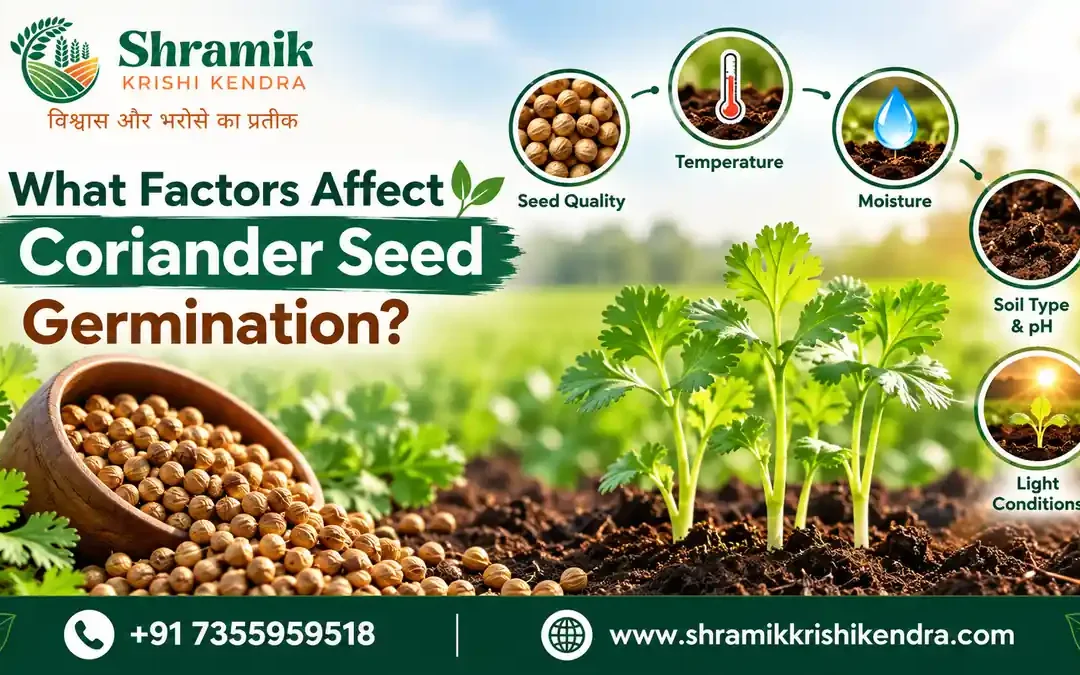
Successful coriander cultivation begins with proper seed germination. Farmers need to understand how soil conditions, moisture, temperature, seed quality, and sowing methods influence the emergence of healthy seedlings. Selecting Hybrid Coriander Seeds is an important starting point, but providing suitable conditions after sowing is equally essential.
Germination is the process through which a seed begins developing into a young plant. Even good-quality seeds may show poor or uneven germination if they are exposed to unsuitable conditions. Understanding these factors helps farmers prepare their fields, follow appropriate sowing practices, and manage coriander crops more effectively. In this article, we will discuss the main factors that influence coriander seed germination and the steps farmers can take to support healthy crop establishment.
1. Seed Quality and Viability
Seed quality is one of the most important factors affecting germination. Healthy, viable seeds have the potential to produce seedlings when provided with suitable environmental conditions. However, old, damaged, or improperly stored seeds may have reduced germination capacity.
Before purchasing coriander seeds, farmers should check the product information, packaging condition, batch details, and available germination information.
Consider these important points:
- Purchase seeds from a reliable supplier.
- Check the variety and brand information.
- Review the packing date and validity details.
- Ensure the packet is sealed and undamaged.
- Follow the recommended seed storage instructions.
Farmers should avoid selecting seeds based only on attractive packaging or low prices. Reviewing product specifications and quality information helps them make more informed purchasing decisions.
2. Soil Moisture and Water Availability
Water is essential for seed germination because it activates the internal processes required for a seed to begin developing. When a seed absorbs sufficient moisture, it starts the process of producing a young root and shoot.
However, providing too much water can create problems. Excess moisture may reduce oxygen availability around the seed and encourage seed decay. On the other hand, insufficient moisture can delay or prevent germination.
Farmers should prepare a suitable seedbed and maintain consistent soil moisture during the germination period. Light irrigation may be helpful when the soil becomes dry, but excessive watering should be avoided.
Proper drainage is equally important. Fields with waterlogging problems should be managed before sowing. Farmers should also consider rainfall and soil type when deciding irrigation frequency.
3. Temperature and Weather Conditions
Temperature influences the speed and uniformity of coriander seed germination. Very high or low temperatures may affect the germination process and early seedling development.
Farmers should select the sowing period according to local weather conditions and agricultural recommendations. Coriander is commonly cultivated during the Rabi season in many parts of India, although the suitable sowing period can vary by region.
Before sowing, consider:
- Local temperature patterns.
- Expected rainfall during the establishment period.
- Soil moisture conditions.
- The availability of irrigation facilities.
- Variety-specific sowing recommendations.
Monitoring weather forecasts can help farmers avoid sowing during unfavourable conditions. Suitable environmental conditions provide a better opportunity for uniform seed emergence.
How Hybrid Coriander Seeds Respond to Suitable Growing Conditions
The germination of Hybrid Coriander Seeds depends on suitable moisture, temperature, soil preparation, and correct sowing practices. Farmers should follow the variety-specific recommendations provided by the seed supplier instead of assuming that every variety performs equally under all environmental conditions.
Proper field preparation and regular monitoring are important during the early stages of crop establishment. Farmers should also avoid unnecessary irrigation and follow recommended sowing depth and spacing.
4. Soil Preparation and Soil Structure
Soil structure plays an important role in seed germination. Coriander seeds require a suitable seedbed that allows moisture and air to reach them.
Hard or compacted soil can make it difficult for young seedlings to emerge. Poorly drained soil may retain excess water, increasing the risk of seed damage. A well-prepared field provides a more suitable environment for seed establishment.
Before sowing, farmers should:
- Prepare a fine and level seedbed.
- Remove weeds and unwanted plant residues.
- Improve drainage where necessary.
- Avoid excessive soil compaction.
- Consider soil testing to understand nutrient conditions.
Soil preparation should be completed according to local agricultural recommendations. Farmers should also ensure that the field is ready before beginning sowing operations.
5. Sowing Depth and Seed Placement
Sowing depth can influence how successfully seedlings emerge from the soil. Seeds placed too deep may struggle to reach the surface, while seeds placed too close to the surface may dry out quickly.
Uniform seed placement helps maintain better field distribution and makes crop management easier. Farmers should follow the recommended sowing depth and spacing for their selected variety.
Avoid covering seeds with excessively heavy soil. After sowing, maintain appropriate moisture without disturbing the seedbed through unnecessary irrigation or field operations.
Correct placement also helps farmers manage the crop more efficiently during early development. If seedlings emerge unevenly, farmers should assess soil moisture, sowing depth, and field conditions before deciding on corrective measures.
6. Seed Storage Before Sowing
Seed storage conditions can affect viability and future germination performance. Exposure to excessive heat, moisture, or direct sunlight may reduce seed quality.
Farmers should store unopened seed packets in a cool, dry place and protect them from moisture. Keep packets away from direct sunlight and avoid storing them near chemicals or materials that could damage the packaging.
Once a packet has been opened, follow the manufacturer’s storage instructions and close it properly after use. Purchasing only the quantity required for the planned cultivation area can also help reduce unnecessary storage.
It is important to check the packet’s validity information before sowing. Seeds that have been stored for long periods under unsuitable conditions may not perform as expected.
7. Proper Seed Selection and Product Information
Choosing a suitable variety is an important part of coriander crop planning. Farmers should compare available varieties based on their cultivation objectives, local climate, market requirements, and recommended growing practices.
Before ordering seeds online, review the product description, packet weight, brand information, and supplier details. Do not make purchasing decisions based only on price or promotional claims.
Farmers who want to buy agriculture products online should select a trusted supplier that provides clear product information and accessible customer support.
A dependable online agriculture store India should make it easier for farmers to explore seed options, compare product specifications, and understand the available details before placing an order.
8. Explore Sungro Kargil Coriander Seeds
Farmers planning coriander cultivation can explore Sungro Kargil Coriander Seeds from Shramik Krishi Kendra. The product listing provides an option for those looking for coriander seeds for their farming requirements.
Before purchasing, review the available packet details and product information. Check whether the variety is suitable for your local growing conditions and follow the recommended sowing and storage instructions.
Selecting a variety should always involve checking the product specifications and understanding its cultivation requirements rather than relying on general performance expectations.
Conclusion
Coriander seed germination depends on several factors, including seed viability, soil moisture, temperature, soil structure, sowing depth, and storage conditions. Farmers who pay attention to these details can create more favourable conditions for seed establishment and manage their crops with better preparation.
Before starting cultivation, review seed quality, prepare the field properly, and follow variety-specific recommendations. Choosing suitable Hybrid Coriander Seeds and providing appropriate growing conditions can help farmers plan their coriander cultivation more carefully. Explore Sungro Kargil Coriander Seeds at Shramik Krishi Kendra to learn more about the available product and make an informed choice for your next coriander crop.