


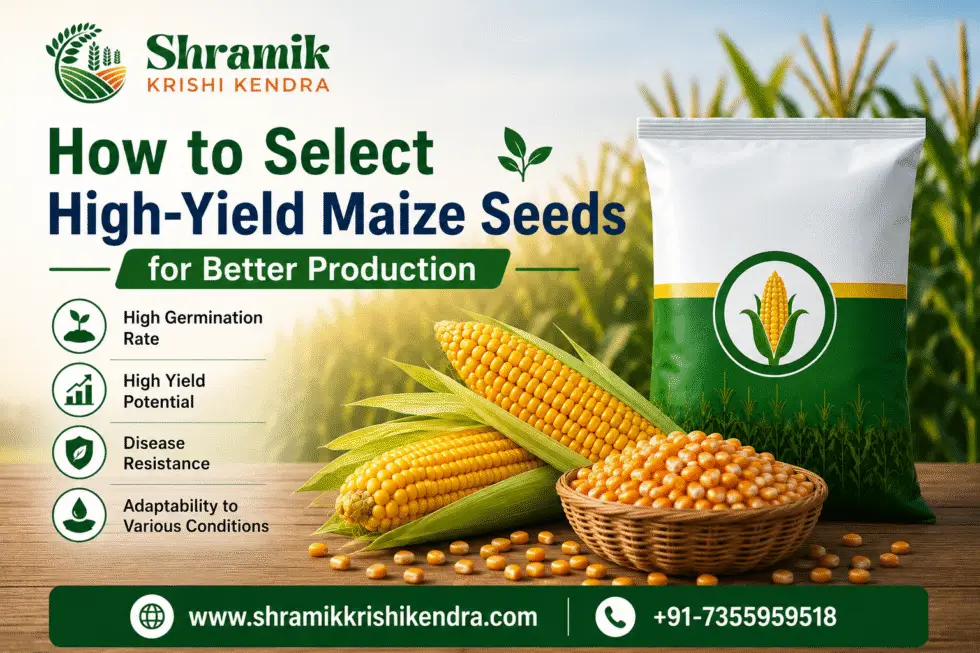
Maize is one of the most profitable crops grown in India for grain, fodder, poultry feed, and industrial use. However, achieving a high yield starts with one important decision—how to select high-yield maize seeds for better production. The right seed variety improves germination, withstands pests and diseases, adapts to local climate, and delivers higher productivity.
With numerous hybrid and open-pollinated maize seeds available in the market, farmers often find it difficult to choose the best option. This guide explains the key factors to consider when selecting maize seeds and how quality seeds can help maximize your harvest.
Why Is It Important to Select High-Yield Maize Seeds for Better Production?
Choosing the right maize seeds is the foundation of a successful crop. Even with proper irrigation, fertilizer, and crop management, poor-quality seeds can reduce yield and profitability. High-quality hybrid maize seeds offer better germination, uniform crop growth, improved disease resistance, and higher grain production compared to traditional varieties.
Benefits of selecting quality maize seeds include:
- Higher grain yield
- Better germination percentage
- Uniform plant growth
- Improved disease resistance
- Better drought tolerance
- Higher market value
Know Your Farming Conditions Before Choosing Maize Seeds
Every farm has different soil, climate, and irrigation conditions. Before purchasing maize seeds, evaluate the following factors.
Soil Type
Maize performs best in well-drained loamy soils, but many hybrid maize seeds are developed for black, sandy, and medium-textured soils.
Climate
Choose maize seed varieties recommended for your region. Rainfed and irrigated areas require different hybrids for the best performance.
Crop Duration
Select a hybrid according to your farming schedule.
- Early maturity – Suitable for multiple cropping.
- Medium maturity – Balanced growth and productivity.
- Late maturity – Higher yield under irrigated conditions.
Choosing the right hybrid according to your local environment significantly improves production.
How to Select High-Yield Maize Seeds for Better Production
The following factors should always be considered before purchasing maize seeds.
1. Check Germination Percentage
Always buy certified maize seeds with a high germination rate. Good germination ensures uniform plant population and healthy crop establishment.
2. Choose High-Yield Hybrid Maize Seeds
Hybrid maize seeds are developed through advanced breeding programs to produce larger cobs, better grain filling, and higher overall yields.
3. Look for Disease Resistance
Select maize hybrids that offer resistance against common diseases such as:
- Downy mildew
- Turcicum leaf blight
- Rust
- Stalk rot
Disease-resistant seeds reduce crop losses and lower production costs.
4. Select Drought-Tolerant Varieties
Weather conditions are becoming increasingly unpredictable. Drought-tolerant maize hybrids help maintain productivity during low rainfall.
5. Choose Lodging-Resistant Hybrids
Strong stalks reduce the risk of plants falling during heavy rain and wind, making harvesting easier and protecting grain quality.
6. Focus on Grain Quality
Choose maize varieties that produce bold, uniform grains with a high shelling percentage for better market prices.
Buy Only Certified Maize Seeds
Never compromise on seed quality.
Before purchasing maize seeds, check:
- Certification label
- Batch number
- Germination percentage
- Manufacturing date
- Expiry date
- Proper packaging
Avoid buying loose or unbranded seeds, as they may have low germination and poor genetic purity.
Hybrid Maize Seeds vs Open-Pollinated Varieties
| Hybrid Maize Seeds | Open-Pollinated Varieties |
|---|---|
| Higher yield potential | Moderate yield |
| Better disease resistance | Lower resistance |
| Uniform crop growth | Less uniform growth |
| Better grain quality | Variable grain quality |
| Higher profitability | Suitable for seed saving |
For commercial maize cultivation, hybrid maize seeds are generally the preferred choice due to their superior productivity and consistency.
Best Practices for Better Maize Production
Selecting quality seeds is only the first step. To maximize production:
- Prepare a fine seedbed before sowing.
- Use the recommended seed rate and spacing.
- Apply balanced fertilizers based on soil testing.
- Irrigate during flowering and grain filling.
- Control weeds at the early growth stage.
- Monitor crops regularly for pests and diseases.
- Follow recommended crop management practices throughout the season.
Combining quality maize seeds with proper crop management leads to healthier plants and higher yields.
Common Mistakes to Avoid
Many farmers unknowingly reduce their yield by making these mistakes:
- Buying seeds based only on low price.
- Using uncertified seeds.
- Choosing varieties unsuitable for local conditions.
- Ignoring disease resistance.
- Purchasing seeds from unreliable sellers.
- Reusing harvested hybrid seeds.
Avoiding these mistakes helps improve productivity and farm profitability.
Conclusion
Understanding how to select high-yield maize seeds for better production is one of the most important steps toward achieving a successful harvest. By choosing certified hybrid maize seeds with high germination, strong disease resistance, and suitability for your local climate, you can improve crop performance and maximize your yield.
Quality seed selection, combined with proper soil preparation, balanced nutrition, irrigation, and timely crop management, lays the foundation for profitable maize farming. Investing in premium-quality maize seeds today can result in healthier crops, better grain quality, and higher returns at harvest.
For genuine high-yield maize seeds, quality agricultural inputs, and reliable farming solutions, choose products that match your crop and local growing conditions. Visit Shramik Krishi Kendra to explore a wide range of trusted farming products and find the right solutions for better crop production and long-term farming success.