


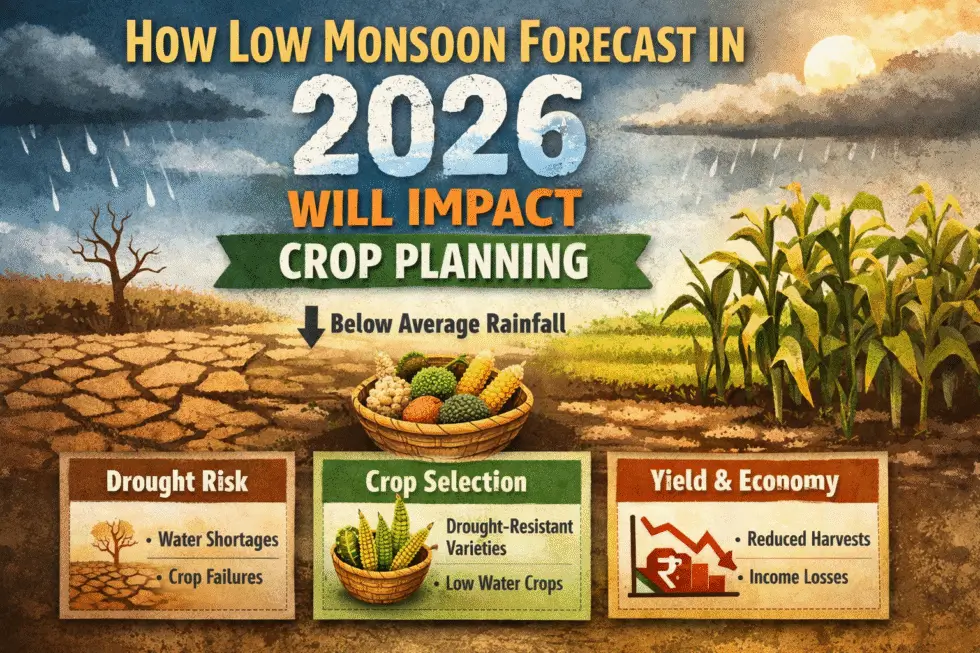
The Indian monsoon plays a critical role in agriculture, directly influencing crop production, soil moisture, and farm income. In 2026, early forecasts suggest a below-normal monsoon, raising concerns among farmers across the country. Reports indicate that rainfall may be around 92% of the long-period average, mainly due to the expected impact of El Niño conditions.
Since nearly 70% of India’s annual rainfall comes from the monsoon, any shortfall can significantly affect farming activities and crop planning decisions.
In this blog, we will explore how a weak monsoon can influence crop planning and what farmers can do to adapt effectively.
Understanding the 2026 Low Monsoon Forecast
What is Causing the Weak Monsoon?
The primary reason behind the expected low rainfall in 2026 is the development of El Niño, a climate phenomenon that weakens monsoon winds and reduces rainfall across India.
Historically, El Niño years have often led to reduced rainfall and drought-like conditions, impacting both Kharif and Rabi crops. The second half of the monsoon (July–September) is expected to be more affected, leading to irregular and uneven rainfall distribution.
Why Monsoon Matters for Farming
A large portion of Indian agriculture is rain-dependent. More than half of the cultivated land relies on monsoon rainfall for irrigation.
This means even a slight decrease in rainfall can impact:
- Sowing time
- Crop selection
- Soil moisture levels
- Overall yield
Impact on Crop Planning in 2026
1. Shift Towards Low Water Crops
With reduced rainfall expected, farmers may need to shift from water-intensive crops like paddy to crops that require less water, such as pulses, millets, and oilseeds.
Experts already suggest avoiding highly water-dependent crops during weak monsoon years to minimize risk.
2. Delayed or Adjusted Sowing Time
Irregular rainfall can disrupt sowing schedules. Farmers may delay planting until sufficient moisture is available in the soil.
Uneven rainfall distribution can also lead to:
- Multiple sowing attempts
- Increased seed costs
- Reduced germination rates
3. Reduced Crop Yield
Lower rainfall directly affects crop growth and productivity. Key crops like:
- Rice
- Cotton
- Soybean
are especially vulnerable to water shortages.
Additionally, reduced soil moisture can also impact Rabi crops, as less water is stored in the soil for the next season.
4. Increased Demand for Drought-Resistant Seeds
Farmers are likely to prefer hybrid and drought-resistant seeds that can survive under low moisture conditions.
This trend is already gaining popularity as farmers look for ways to protect their crops against unpredictable weather patterns.
5. Pressure on Water Resources
A weak monsoon also affects reservoirs, groundwater levels, and irrigation systems.
Uneven rainfall can result in:
- Water shortages in some regions
- Excess rainfall in others
This imbalance makes crop planning even more challenging.
Smart Crop Planning Strategies for Farmers
1. Choose Climate-Smart Crops
Selecting crops based on rainfall predictions is the first step. Opt for crops that require less water and have shorter growing cycles.
2. Improve Soil Health
Healthy soil retains moisture better. Farmers should focus on:
- Organic matter addition
- Proper tillage
- Soil moisture conservation techniques
3. Use Modern Farming Tools
Using efficient farming tools can help reduce water usage and improve productivity. Many farmers now prefer to buy farming tools online to access modern and affordable equipment that supports better farm management.
4. Adopt Micro-Irrigation Techniques
Drip irrigation and sprinkler systems help save water and ensure efficient usage, especially during low rainfall conditions.
5. Plan for Risk Management
Farmers should diversify crops and avoid depending on a single crop. This reduces the risk of complete loss in case of poor rainfall.
Role of Technology and Market Trends
Modern agriculture is becoming more resilient with the help of technology. Farmers are now using:
- Weather forecasting apps
- Soil testing tools
- Advanced seeds
These innovations help farmers make better decisions even during uncertain monsoon conditions.
Additionally, access to online platforms has made it easier to buy farming tools online, ensuring farmers are better prepared for changing weather patterns.
Conclusion
The low monsoon forecast for 2026 is a significant concern for Indian agriculture, but it also highlights the need for smarter crop planning. Reduced rainfall can impact sowing, yield, and overall farm income, making it essential for farmers to adapt their strategies.
By choosing the right crops, improving soil health, and adopting modern farming techniques, farmers can reduce risks and maintain productivity even in challenging conditions.
Today, many farmers are upgrading their practices and choosing to buy farming tools online to improve efficiency and manage resources better.
For high-quality agricultural inputs, tools, and expert farming solutions, Shramik Krishi Kendra is a trusted platform helping farmers achieve better results in every season.