


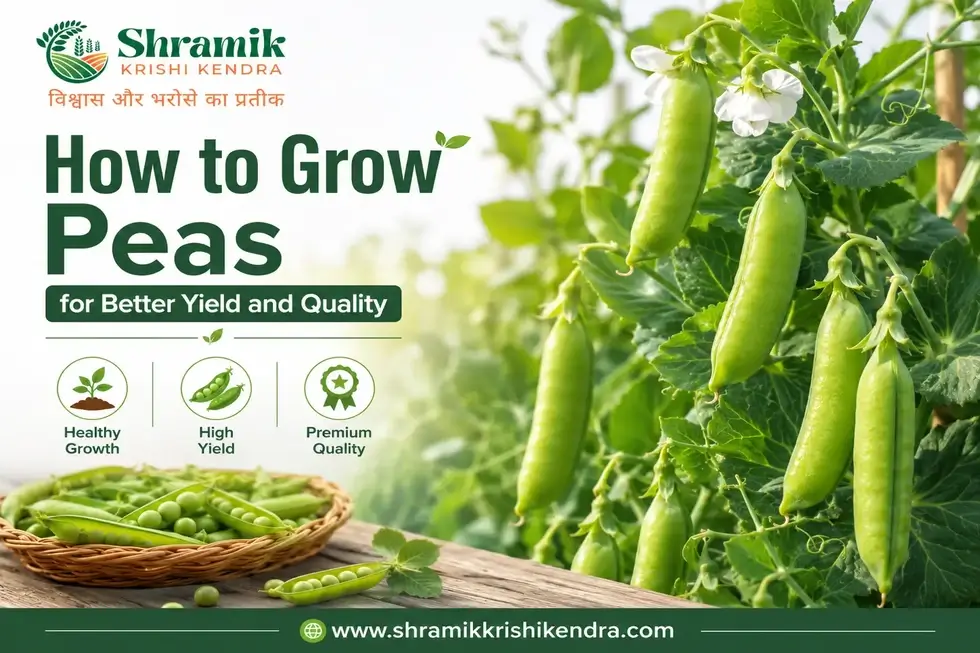
Growing peas successfully requires the right combination of quality seeds, suitable soil, proper sowing, irrigation, nutrition, and timely crop protection. Whether you are cultivating peas for fresh consumption or commercial production, following the right practices can help improve plant growth, pod formation, yield, and overall quality. Learning How to Grow Peas for Better Yield and Quality begins with selecting a suitable pea variety and providing the crop with favorable growing conditions from sowing to harvest.
How to Grow Peas for Better Yield and Quality: Start with Quality Seeds
The foundation of a healthy pea crop is good-quality seed. Farmers should select varieties according to their local climate, soil conditions, growing season, market demand, and expected harvest period. Healthy seeds generally provide better germination and help establish a uniform crop.
When selecting pea seeds, consider characteristics such as plant vigor, pod size, maturity period, productivity, and resistance or tolerance to common crop problems. Hybrid and improved varieties can be particularly useful when they are suitable for the local growing environment.
Farmers looking for suitable varieties can explore options such as Advanta GS 10 Green Peas (Matar) Seeds, Mucio Peas Seed by Syngenta, and GS-10 Pea Seeds Sweet High Yield. Choosing the right variety can make a significant difference in achieving a productive and marketable crop.
Before sowing, inspect the seed for physical damage, discoloration, insects, or signs of poor quality. Avoid using old or improperly stored seed because reduced germination can result in uneven plant populations and lower productivity.
Preparing the Soil for Better Pea Growth
Peas generally perform well in fertile, well-drained soil with good organic matter. Waterlogging should be avoided because excessive moisture around the roots can restrict growth and encourage root-related problems.
Prepare the field properly before sowing. Plough or loosen the soil to create a fine and workable seedbed. Remove weeds and crop residues that may interfere with germination or harbor pests and diseases.
Adding well-decomposed organic manure can improve soil structure and contribute nutrients. Soil testing is also useful because it helps farmers understand nutrient availability and make more informed fertilizer decisions.
Good drainage is especially important. If the field has a tendency to retain water, raised beds or suitable drainage channels can help maintain better root-zone conditions.
How to Grow Peas for Better Yield and Quality Through Proper Sowing
Correct sowing practices help establish a strong and uniform crop. Sow seeds at an appropriate depth rather than placing them too deeply. Excessively deep sowing can delay emergence, while very shallow sowing may leave seeds vulnerable to drying or other environmental stresses.
Maintain suitable spacing between rows and plants so that crops receive adequate sunlight and air circulation. Proper spacing also makes field operations such as irrigation, weeding, monitoring, and harvesting easier.
Seed treatment may be considered where recommended for the selected variety and local growing conditions. Always follow the product label and agricultural recommendations when using seed-treatment products.
Timely sowing is another important factor. The suitable sowing period varies according to the region and prevailing temperature. Farmers should choose a planting window that supports healthy germination and vegetative development.
Irrigation and Nutrient Management
Pea plants need adequate moisture, particularly during germination, flowering, and pod development. However, irrigation should be managed carefully because both water stress and excessive moisture can affect crop performance.
Instead of following a fixed irrigation schedule, consider soil moisture, weather conditions, crop stage, and field drainage. Light and timely irrigation can help maintain consistent growth. Avoid prolonged waterlogging.
Nutrient management should also be based on soil fertility and crop requirements. Peas are legumes and have a special relationship with beneficial soil bacteria that can help with nitrogen fixation. Maintaining healthy roots and suitable soil conditions supports this natural process.
Phosphorus, potassium, and other nutrients may also contribute to healthy root development, flowering, pod formation, and overall crop performance. Use fertilizers according to soil-test recommendations and local agricultural guidance rather than applying excessive quantities.
Weed, Pest, and Disease Management
Weeds compete with pea plants for nutrients, water, sunlight, and space. Keeping the field relatively weed-free during the early stages of crop growth can help plants establish more effectively.
Regularly inspect plants for insect activity and disease symptoms. Look for changes in leaf color, spots, curling, holes, wilting, or unusual plant growth. Early identification makes crop management easier.
Integrated crop management can include field sanitation, proper spacing, balanced nutrition, timely irrigation, resistant or tolerant varieties where available, and appropriate crop-protection measures. If a pesticide or fungicide is required, select a product approved for the crop and target problem and follow the label directions carefully.
Farmers who want to buy agriculture products online can compare seeds and other agricultural inputs according to crop requirements and product specifications before purchasing.
Harvesting Peas at the Right Stage
Harvest timing has a direct impact on pea quality. For fresh green peas, pods should generally be harvested when they have developed properly and the peas inside have reached the desired size and tenderness.
Harvesting too early may result in underdeveloped peas, while delayed harvesting can lead to tougher pods and reduced eating quality. Frequent picking can also encourage continued production in suitable varieties.
Handle harvested pods carefully to reduce bruising and physical damage. Keep produce away from excessive heat after harvesting and follow suitable storage and transportation practices to preserve freshness.
How to Grow Peas for Better Yield and Quality: Key Practices
To achieve better results, farmers should focus on the complete crop cycle rather than relying on a single input. Start with quality seeds, prepare the soil properly, maintain suitable spacing, manage irrigation carefully, provide balanced nutrition, control weeds, monitor pests and diseases, and harvest at the appropriate stage.
Access to reliable agricultural inputs can make these practices easier to implement. Farmers searching for an online argriculture store india can evaluate product quality, variety suitability, specifications, and crop requirements before making a purchase.
Conclusion
Understanding How to Grow Peas for Better Yield and Quality helps farmers make better decisions throughout the production cycle. Quality seed selection, proper soil preparation, timely sowing, balanced nutrition, efficient irrigation, weed management, crop monitoring, and timely harvesting all contribute to a healthy and productive pea crop.
For better results, select varieties suited to your local conditions and purchase genuine agricultural inputs from reliable sources. Shramik Krishi Kendra provides quality seeds and agricultural products to support farmers in achieving better crop health, pod quality, and overall yield through proper crop management.