


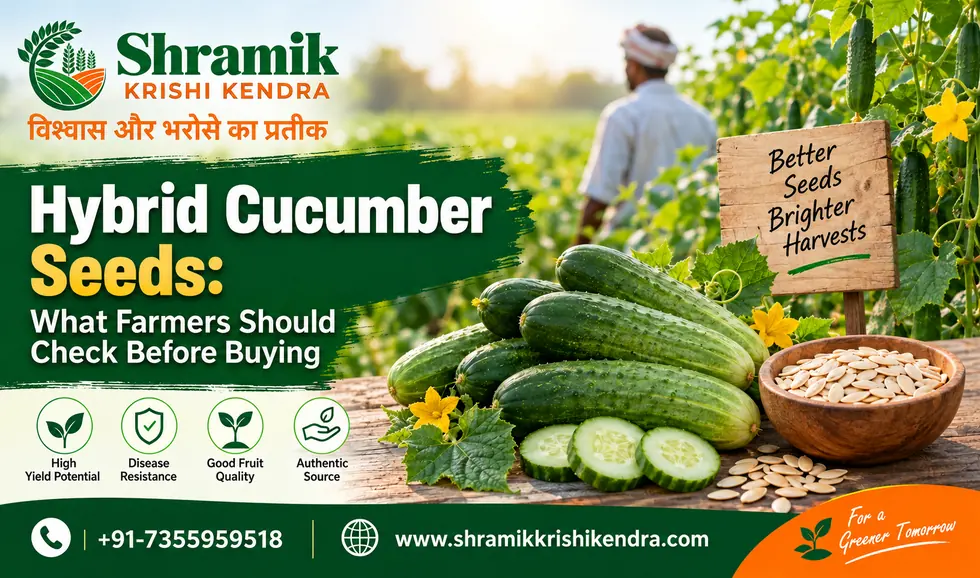
Choosing the right seeds is one of the first decisions that can influence cucumber crop performance. Farmers need seeds that suit their growing conditions, offer good germination, and have desirable fruit characteristics. With many varieties available in the market, understanding what to check before making a purchase can help reduce avoidable crop problems and support better planning.
When selecting Hybrid Cucumber Seeds, farmers should look beyond attractive packaging or promotional claims. Seed quality, variety characteristics, disease tolerance, growing conditions, and supplier reliability are all important factors to consider before buying.
1. Check Seed Quality and Germination Potential
Good-quality seeds should have strong germination potential and be suitable for the intended growing conditions. Poor-quality seeds may result in uneven germination, gaps in the field, and inconsistent plant growth.
Before purchasing, check the seed packet for:
- Germination percentage
- Lot or batch number
- Packing and expiry dates
- Seed treatment information
- Recommended growing conditions
- Crop and variety details
- Hybrid Cucumber Seeds
Following the recommended sowing depth and spacing can also help plants establish more uniformly.
2. Understand the Hybrid Variety
Not every cucumber hybrid is developed for the same purpose. Some are selected for fresh-market production, while others may be preferred for particular fruit shapes, sizes, colours, or harvesting requirements.
Farmers should consider characteristics such as:
- Fruit size and shape
- Skin colour and appearance
- Crop duration
- Plant vigour
- Harvesting period
- Expected market preference
- Suitability for open-field or protected cultivation
Understanding these characteristics before purchasing helps farmers select a variety that matches their production goals.
3. Consider Disease Tolerance and Crop Conditions
Cucumber crops can be affected by several diseases, particularly when temperature, humidity, irrigation, and field conditions favour pathogen development. A suitable hybrid with tolerance or resistance to relevant diseases can be valuable as part of an integrated crop-management strategy.
Hybrid Cucumber Seeds Should Match Your Farming Conditions
Farmers should consider their local climate, soil type, irrigation availability, and cultivation method before selecting seeds. A variety that performs well in one region may not necessarily provide the same results under different conditions.
For protected cultivation, farmers may have different requirements compared with open-field production. Therefore, checking the supplier’s recommended cultivation conditions is important before placing an order.
4. Look at Fruit Quality and Market Demand
Cucumber production is closely connected to market requirements. Buyers may prefer fruits with particular sizes, shapes, colours, freshness, and uniformity.
Before choosing a variety, farmers can consider:
- What fruit size is commonly demanded in the target market?
- Is uniform fruit production important?
- How frequently will harvesting be carried out?
- Does the variety suit local consumer preferences?
- What type of cucumber do nearby buyers usually purchase?
Selecting a seed variety according to market demand can help farmers plan production more effectively.
5. Check Seed Packaging and Authenticity
Authentic packaging is an important consideration when purchasing agricultural seeds. Farmers should purchase from reliable sellers and carefully examine the information printed on the package.
Avoid purchasing packets that appear damaged, tampered with, poorly labelled, or missing essential information. Keeping the seed packet and purchase details can also be useful for maintaining farm records.
Farmers looking to buy agriculture products online should choose an established agricultural store that provides clear product information and reliable customer support.
6. Compare the Seed With Your Production Goals
Before buying, farmers should clearly define what they want to achieve from the crop. A small-scale grower may have different requirements from a commercial farmer supplying vegetables to wholesale markets.
Consider factors such as:
- Available cultivation area
- Expected crop duration
- Labour availability
- Irrigation facilities
- Production method
- Target market
- Budget for cultivation
This simple comparison can make the seed-selection process more practical and help farmers avoid choosing a variety based solely on price.
7. Buy From a Reliable Agricultural Supplier
The supplier is another important part of the buying decision. A dependable agricultural store should provide accurate product details and help customers understand the basic requirements of the seed variety.
Farmers searching for an online argriculture store in india should verify product information, packaging details, seller reliability, and available customer support before purchasing.
Make a Careful Seed Selection Before Sowing
Seed selection should be treated as an important part of crop planning rather than a last-minute purchase. Farmers can make better decisions by checking germination information, variety characteristics, cultivation suitability, disease tolerance, fruit quality, packaging, and market demand.
Good planning does not guarantee a particular yield because crop performance also depends on soil preparation, irrigation, nutrition, weather, pest management, and other farming practices. However, starting with suitable seed gives the crop a stronger foundation.
Conclusion
Selecting the right Hybrid Cucumber Seeds requires more than simply choosing a popular variety. Farmers should evaluate seed quality, variety characteristics, disease tolerance, cultivation conditions, fruit quality, market demand, packaging, and supplier reliability before purchasing. By considering these factors carefully, growers can make informed seed-buying decisions and plan their cucumber cultivation more efficiently.
A reliable agricultural supplier can also make the purchasing process easier by providing clear product information and suitable farming inputs. With careful selection and proper crop management, farmers can build a stronger foundation for productive cucumber cultivation.