


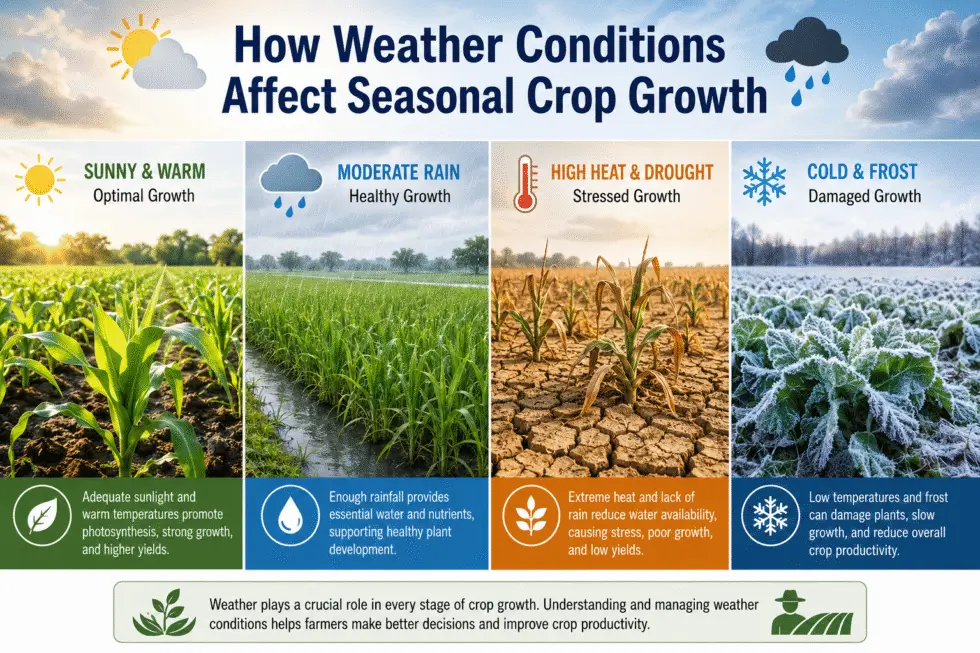
Weather plays a major role in agriculture, especially when it comes to seasonal crops. Understanding how weather conditions affect seasonal crop growth helps farmers make better farming decisions throughout the year. Farmers may prepare their fields, seeds, fertilizers, and irrigation systems carefully, but sudden changes in temperature, rainfall, humidity, and sunlight can still impact crop growth and overall productivity.
In India, seasonal farming depends heavily on climate patterns. Whether it is Kharif, Rabi, or Zaid crops, every crop requires suitable weather conditions for proper germination, plant development, flowering, and harvesting. Farmers who understand weather behavior are usually better prepared to protect crops from damage and maintain healthy plant growth throughout the season.
Why Weather Conditions Matter in Seasonal Farming
Every crop has its own environmental requirements. Some crops grow well in warm and humid conditions, while others require cooler temperatures and controlled moisture.
Weather conditions directly affect:
- Seed germination
- Root development
- Flowering and fruit setting
- Nutrient absorption
- Pest and disease spread
- Overall crop yield
When weather conditions become unstable, crops may experience stress, slower growth, or disease problems.
According to Google’s people-first content guidance, helpful agricultural content should focus on practical farming challenges and provide useful information based on real farming conditions rather than generic advice.
How Temperature Impacts Seasonal Crop Growth
Temperature is one of the most important factors in crop development. Different crops require different temperature ranges during their growth stages.
High Temperature Stress
Excessive heat can create several farming problems:
- Reduced soil moisture
- Poor flowering
- Faster water evaporation
- Leaf damage
- Lower fruit quality
Crops such as vegetables and pulses are often sensitive to extreme heat during flowering stages.
Low Temperature Problems
Cold weather may slow plant growth and affect nutrient uptake. In some cases, frost damage can weaken plants and reduce productivity.
Farmers usually monitor seasonal forecasts carefully to plan sowing and irrigation schedules more effectively.
Rainfall and Water Availability in Farming
Rainfall is essential for crop growth, especially during the Kharif season. However, both excess rain and insufficient rainfall can create challenges.
Effects of Heavy Rainfall
Too much rain can cause:
- Waterlogging
- Root rot
- Fungal diseases
- Soil nutrient loss
- Poor oxygen supply to roots
During monsoon season, farmers often face crop diseases due to excess moisture and humidity.
Impact of Low Rainfall
Insufficient rainfall may result in:
- Poor seed germination
- Dry soil conditions
- Weak plant growth
- Reduced crop yield
Many farmers now combine irrigation planning with weather monitoring to reduce farming risks.
Humidity and Crop Disease Management
Humidity levels strongly influence pest and disease activity in crops.
High humidity conditions commonly encourage:
- Fungal infections
- Leaf spot diseases
- Mildew problems
- Bacterial spread
Seasonal crops grown during monsoon periods are particularly vulnerable to fungal diseases. Proper crop protection practices and field monitoring become important during humid conditions.
Importance of Air Circulation
Good field spacing and balanced irrigation help improve airflow around plants and reduce excessive moisture buildup.
This practical approach helps maintain healthier crop conditions during changing weather.
Sunlight and Plant Development
Sunlight is essential for photosynthesis and healthy crop growth. Crops use sunlight to produce energy for plant development and fruit production.
Benefits of Proper Sunlight
Adequate sunlight supports:
- Strong plant growth
- Better flowering
- Healthy fruit development
- Improved crop quality
Cloudy weather for long periods may reduce plant growth and affect productivity.
Farmers often select seasonal crop varieties according to local climate conditions and sunlight availability.
How Farmers Can Manage Weather-Related Farming Challenges
Weather cannot be controlled, but farmers can reduce risks by adopting better farming practices.
Practical Farming Tips
- Choose suitable seasonal crop varieties
- Monitor local weather forecasts regularly
- Use balanced irrigation methods
- Maintain proper soil drainage
- Apply crop protection products when necessary
- Follow recommended sowing schedules
These simple farming practices help improve crop resilience during changing weather conditions.
Google’s helpful content system now prioritizes original, practical, and experience-focused information that genuinely helps users solve problems instead of content written only for rankings.
Importance of Seasonal Farming Planning
Modern farming requires more planning than before. Climate changes and irregular weather patterns are affecting traditional farming cycles across many regions.
Farmers who understand seasonal weather behavior can make smarter decisions regarding:
- Seed selection
- Fertilizer management
- Crop protection
- Irrigation planning
- Harvest timing
This improves both crop health and long-term farm productivity.
Conclusion
Weather conditions have a direct impact on seasonal crop growth, from seed germination to final harvest quality. Temperature, rainfall, humidity, and sunlight all influence plant development and farming success. Understanding these weather-related factors helps farmers prepare better and reduce crop risks during different farming seasons.
By following practical farming methods and adapting to changing climate conditions, farmers can improve crop health, manage seasonal challenges more effectively, and support better agricultural productivity.
For agricultural products, seasonal crop solutions, and farming support, farmers can explore Shramik Krishi Kendra.