

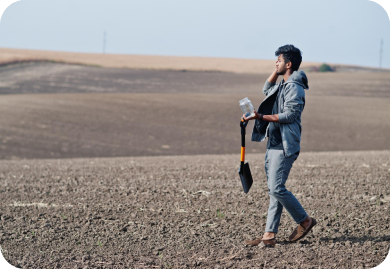
1. Water Management – The Soul of Farming
The key to successful farming in India is water management. Both floods and droughts are a problem for farmers.
- Adopt drip irrigation or micro-irrigation – water wastage will be reduced.
- Build rainwater harvesting structures such as borewell tanks, drains or small ponds.
- Mulch to retain soil moisture – use straw, leaves or plastic mulch.
2. Soil Fertility – Know the Story of Your Land
First, get a soil test done.
- Information about pH, nitrogen, phosphorus, potash etc. will be available.
- Based on that, make the correct mixture of fertilizer (organic or chemical).
- Improve with bio-fertilizers like compost, vermi-compost, green manure.
3. Crop rotation and tillage system
- Practice crop rotation—avoid planting the same crop repeatedly. This will reduce pests, diseases, and soil fatigue.
- Minimum tillage (No-Till / Zero-Till) techniques reduce soil erosion and preserve soil structure.
- Cover bare fields with cover crops like mung bean, pigeon pea, or sorghum – this prevents soil erosion and retains moisture.
4. Biological and augmentative pest management
- Reduce chemical pest control. Adopt biological control methods such as Trichoderma, a bacteria-based pesticide.
- Botanical pesticides such as neem, doob leaf, garlic extract can be effective.
- Adopt an Integrated Pest Management (IPM) strategy—control only when pest levels are high, otherwise employ natural control.
5. Technical support and smart farming
- Measure soil moisture, temperature, and nutrient levels with sensors and IoT devices.
- Get weather information, seeds and market prices from smart apps and agriculture platforms (Apps / Portals).
- Crop monitoring by drone, pest detection is easy.
6. Market and value addition
- Processing after harvesting – like dry spices, powder, juice etc.
- Direct Marketing – Reach the consumer directly, cutting out middlemen.
- Use Agri-Market Platforms like online food markets, cooperative mandis, Farmer Producer Organizations (FPO).
Conclusion
In today’s world, farming is no longer just a matter of traditional knowledge—it’s a confluence of knowledge, technology, and innovation. If we respect water, care for the soil, and adopt smart farming, our farmers, our planet, and our economy—all three will be strengthened.