


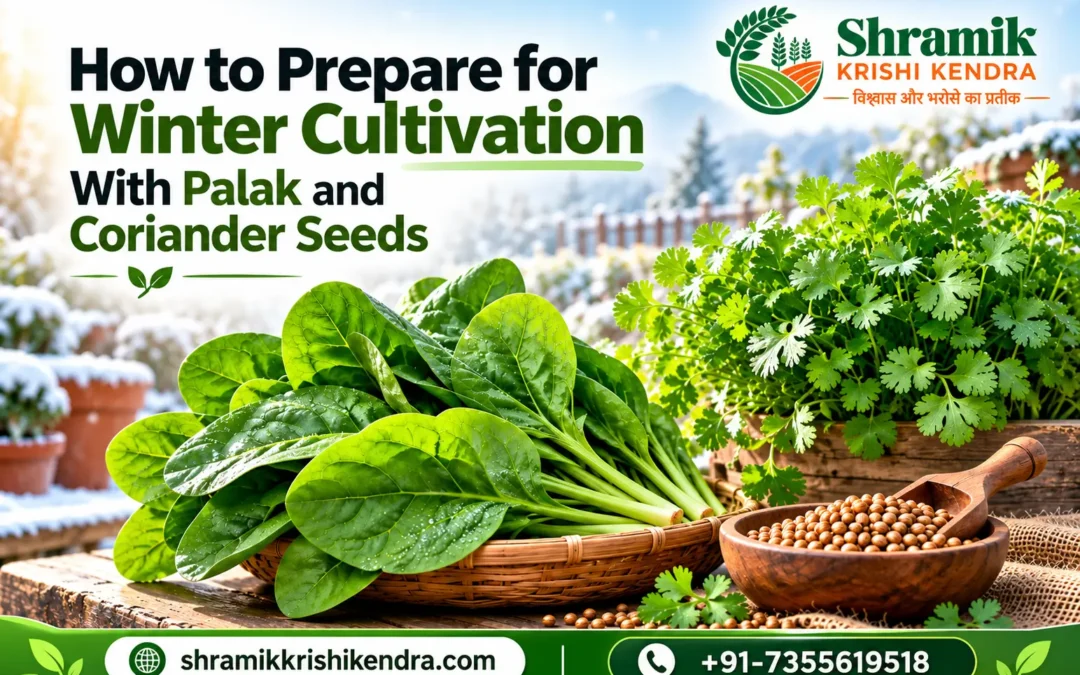
Winter is an important season for growing leafy vegetables in many parts of India. Palak and coriander are popular choices for farmers because they are used in everyday cooking and can be sold in local vegetable markets. Proper field preparation, suitable seed selection, and timely sowing help farmers plan their crops according to local weather and market demand.
Selecting hybrid Palak seeds and hybrid Coriander Seeds requires checking variety characteristics, regional suitability, and recommended cultivation practices. With the right preparation, farmers can manage their fields more efficiently and support healthy crop development.
Why Winter Is Suitable for Palak and Coriander Cultivation
Palak and coriander generally perform well under suitable cool-season conditions. However, their growth depends on temperature, soil quality, moisture, and the variety selected.
Palak is valued for its leafy growth, while coriander can be cultivated for fresh leaves or seeds, depending on the variety and farming objective. Farmers should select varieties according to their intended harvest and local agricultural recommendations.
Before sowing, check the recommended planting window for your region. In North Indian plains, palak and coriander are commonly included in winter vegetable cultivation plans. Local weather conditions may affect the best sowing time.
How to Prepare Your Field for Winter Cultivation
1. Select Suitable Soil and Prepare the Land
Both crops benefit from well-drained soil that supports healthy root development. Prepare the field by removing weeds, stones, and large soil clods. Incorporate well-decomposed organic matter where appropriate to improve soil structure.
Level the field or prepare suitable beds according to your irrigation method. Proper drainage is especially important because standing water can damage roots and affect crop establishment.
2. Choose Seeds According to Your Farming Goals
Seed selection should match the crop’s purpose, growing conditions, and expected market requirements. Farmers should review maturity information, recommended sowing conditions, germination details, and other product specifications before buying.
When comparing hybrid Palak seeds, consider the expected leaf characteristics and suitability for repeated leaf harvesting, where applicable. For coriander, choose a variety suited to either fresh-leaf production or seed harvesting, depending on your plan.
3. Follow Recommended Sowing Practices
Sow seeds at the recommended depth and spacing for the selected variety. Line sowing can make weeding, irrigation, crop monitoring, and harvesting easier than indiscriminate broadcasting.
Avoid sowing too densely, as overcrowding can lead to competition for light, nutrients, and moisture. Follow the seed packet instructions and local agricultural guidance for the appropriate seed rate.
Irrigation and Crop Management During Winter
Maintaining suitable soil moisture is important during germination and early crop growth. Provide light irrigation after sowing when needed, while avoiding waterlogging. Irrigation frequency should depend on soil type, rainfall, temperature, and the crop’s growth stage.
Remove weeds regularly to reduce competition for nutrients and water. Inspect plants for pests, diseases, and signs of nutrient deficiency, and follow locally recommended management practices when problems occur.
Farmers growing coriander for leaves should manage the crop according to the desired harvesting stage. Those growing it for seeds should follow the variety’s recommendations for plant development and maturity.
How to Plan Harvesting and Market Supply
Planning harvests before sowing can help farmers coordinate production with local market requirements. Palak may allow repeated leaf cuttings when the selected variety and crop management support this practice. Coriander grown for fresh leaves has a different harvest schedule from coriander grown for seed.
Check the expected maturity period for your chosen variety and monitor crop development regularly. Harvest at the appropriate stage to maintain product quality, and handle leafy produce carefully to preserve freshness.
Farmers should also consider transport, market demand, labour availability, and the cost of inputs when deciding how much land to allocate to each crop.
Where to Buy Palak and Coriander Seeds Online
Choosing a reliable supplier is an important part of crop planning. An online agriculture store india farmers can access makes it convenient to compare available products and review their specifications before ordering.
Shramik Krishi Kendra offers seed products that farmers can explore for their cultivation needs:
Before purchasing, confirm the product name, pack size, sowing recommendations, and availability. A reliable seeds dealer should provide clear product information to help buyers make informed decisions.
Conclusion
Successful winter cultivation begins with careful planning, suitable soil preparation, appropriate sowing practices, and consistent crop management. Farmers should select varieties based on their regional conditions, harvesting goals, and market requirements rather than relying on general claims about seed performance.
Choosing hybrid Coriander Seeds that suit your cultivation plan, along with appropriate palak varieties, can help you organise your winter vegetable production more effectively. Explore the available products at Shramik Krishi Kendra and review their specifications before preparing your next crop.
Correct the SEO keyword capitalization Fix the unclear agriculture-store sentence.