

November is an important month for vegetable cultivation in many parts of India. As the monsoon season ends and temperatures begin to fall, farmers start preparing their fields for cool-season crops. It is a good opportunity to review the sowing calendar, choose appropriate vegetable varieties, and plan the next harvest.
But one common mistake is assuming that every winter vegetable can be planted at the same time. The growing season in Uttar Pradesh is different from the conditions in Rajasthan, Maharashtra, or the Himalayan regions. Even within the same state, temperature, soil type, and irrigation availability can affect sowing decisions.
For farmers planning their next crop, understanding which vegetable seeds to sow in November in India can make seed selection and field preparation more manageable.
This guide explores suitable Rabi season vegetables, seed selection considerations, soil preparation, and practical crop-planning tips.
Quick Answer: Which Vegetable Seeds Can Be Sown in November in India?
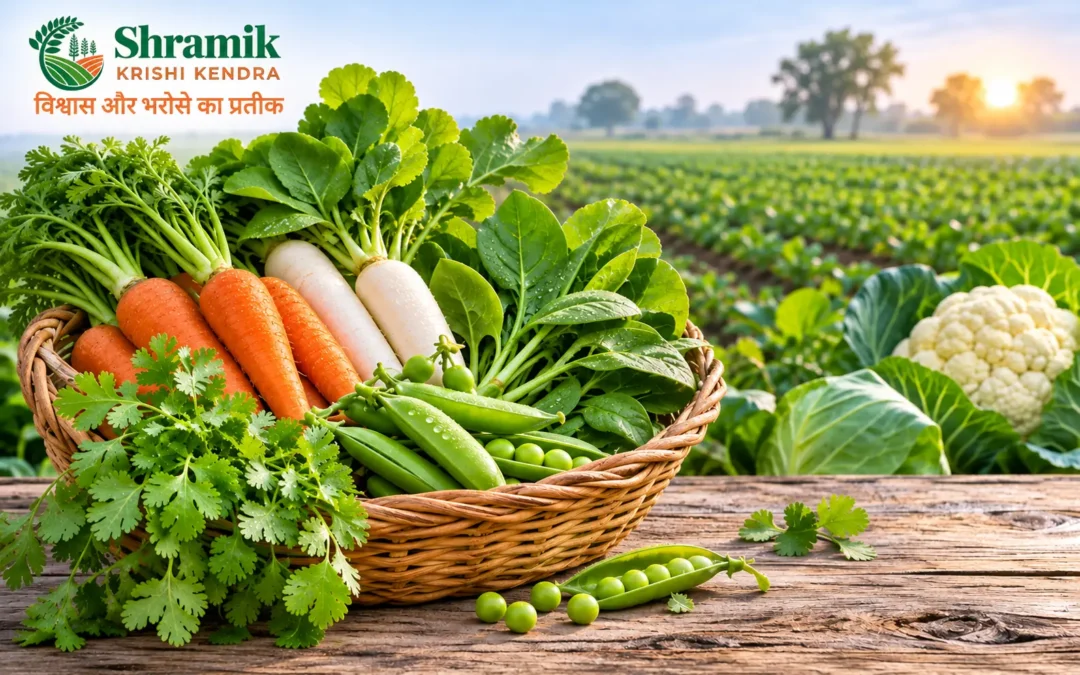
In many parts of North India, November can be suitable for sowing crops such as peas (matar), radish (muli), carrots (gajar), spinach or palak, and coriander (dhania). Certain cabbage and cauliflower varieties can also be considered for seasonal cultivation or transplanting.
The exact sowing period depends on the region, weather conditions, and selected variety. Farmers should follow local agricultural recommendations rather than relying on one nationwide planting calendar.
Why November Matters for Rabi Season Vegetable Farming
The Rabi season generally covers crops grown during the cooler part of the year. For vegetable growers in North India, autumn and early winter offer an opportunity to cultivate crops that perform well in suitable cool conditions.
Lower temperatures may support the growth of certain leafy and root vegetables. However, cool weather alone does not guarantee good crop performance.
A crop also needs suitable soil, adequate moisture, appropriate nutrition, and timely management.
Before selecting seeds, farmers should consider:
- Whether the crop is suitable for their local growing conditions.
- The recommended sowing window for the selected variety.
- Available irrigation and field drainage.
- Soil condition and previous cropping history.
- Expected harvest period and local market requirements.
For example, a farmer growing fresh peas for a nearby vegetable market may prioritise pod characteristics and harvest timing. Someone growing radish may focus on root size, shape, maturity, and the suitability of the soil.
Both decisions begin with the crop and market requirements, not simply the seed price.
1. Peas (Matar): A Popular Cool-Season Vegetable
Peas are widely grown during the cooler season in many parts of India. In suitable North Indian conditions, October and early November are important sowing periods for several vegetable pea varieties.
Farmers considering Hybrid Pea Seeds or other improved pea varieties should first check the recommended planting conditions and variety characteristics.
What to check before sowing peas
Choose a field with good drainage and prepare the soil so that seeds can establish evenly. Avoid areas where water remains standing after irrigation.
Review the seed packet for sowing depth, plant spacing, growth habit, maturity period, and any special crop requirements.
For commercial growers, the expected harvesting window is particularly important. Early and later-maturing varieties can have different market opportunities, depending on local demand.
Farmers should also inspect the crop regularly during establishment and flowering.
To explore the cultivation process in more detail, read our guide on how to grow peas for better yield and quality.
You can also explore available products in the Peas Seeds category at Shramik Krishi Kendra.
2. Radish (Muli): Choose the Right Variety and Soil
Radish is another important cool-season vegetable, valued for its edible roots and relatively short growing cycle in suitable conditions.
November can be a suitable sowing period for certain radish varieties in parts of India. However, temperature tolerance and root characteristics differ between varieties.
When considering Hybrid Radish Seeds, farmers should look beyond the product name.
Important considerations for radish cultivation
Soil preparation: Radish develops its edible portion underground, so soil structure matters. Deep, loose soil that is free from large stones and hard clods allows roots to develop with fewer physical obstructions.
Seed spacing: Overcrowded plants compete for available space and resources. Follow the recommended spacing and thin seedlings where required.
Moisture management: Irregular moisture and waterlogging can affect crop establishment and root quality. Maintain appropriate moisture according to soil conditions.
Harvest planning: Choose varieties with maturity periods suited to the intended market.
For further information, explore our radish crop management guide.
Farmers can also browse the Radish Seeds collection to compare available varieties.
3. Carrots (Gajar): Plan for Healthy Root Development
Carrots are a familiar winter vegetable in India. They are grown for household consumption as well as local and commercial vegetable markets.
Depending on the region and variety, November may fall within a suitable planting period for carrot cultivation.
Farmers looking at Hybrid Carrot Seeds should consider the intended root colour, shape, size, maturity, and local market preferences.
How to prepare for carrot sowing
Carrots generally benefit from deep, well-prepared soil with good drainage.
Stones, large soil clods, and compacted layers may interfere with normal root development. Preparing the seedbed carefully is therefore an important step before sowing.
Avoid making fertilizer decisions based only on assumptions about the soil. A soil test can help identify nutrient requirements, while local agricultural recommendations can guide appropriate application.
Select the sowing depth and spacing according to the chosen variety.
For a detailed discussion of carrot seed selection, read what farmers should know about high yield red carrot seeds.
Explore our Carrot Seeds range for additional variety options.
4. Palak (Spinach): Plan for Leafy Vegetable Production
Palak is an important leafy vegetable grown in many parts of India during suitable cool-weather conditions.
It is often considered by growers supplying local markets, vegetable sellers, or households that prefer fresh leafy produce.
When comparing Hybrid Spinach Seeds or other palak seed options, check the botanical crop type, variety characteristics, recommended growing season, and intended harvesting method.
In India, the names palak, spinach, and spinach beet may be used differently across products. Checking the actual species and seed label helps prevent confusion.
Practical palak cultivation tips
Start with a properly prepared field and remove existing weeds before sowing.
Maintain suitable moisture during germination and early growth. Avoid waterlogging, particularly where drainage is poor.
Plant density also matters. Crowded plants may compete for sunlight, nutrients, and moisture.
Where repeated leaf harvesting is planned, select varieties and harvesting methods that support that purpose.
Farmers interested in leafy vegetable cultivation can read our existing article on winter cultivation with palak and coriander seeds.
5. Coriander (Dhania): Match the Variety to the Harvest
Coriander is grown in India for both fresh green leaves and dried seeds.
These two production goals require different planning decisions.
A grower supplying fresh coriander leaves to a vegetable market may prefer characteristics related to leaf growth, harvest timing, and freshness. A farmer growing coriander for dry seed production will have different crop-management priorities.
Before buying Hybrid Coriander Seeds or other coriander varieties, verify the type, intended use, and recommended planting conditions.
Factors to consider during coriander cultivation
Coriander needs suitable temperature, moisture, and soil conditions for successful germination.
Seed quality is important, but even viable seeds may establish poorly when planted into unsuitable soil or exposed to excessive moisture.
Prepare the field before sowing, follow the variety’s planting recommendations, and avoid over-irrigation.
For a closer look at germination, read what factors affect coriander seed germination.
Our Coriander Seeds collection provides additional product options to explore.
6. What About Cabbage, Cauliflower, and Other Winter Vegetables?
Peas, radish, carrots, palak, and coriander are not the only crops farmers may consider during the Rabi season.
Cabbage and cauliflower are also important cool-season vegetables. However, many varieties are established through nurseries and transplanted rather than being sown directly into the main field.
The timing is particularly important for cauliflower because varieties differ in their temperature requirements and maturity groups.
Farmers should choose the correct seasonal variety and follow its recommended nursery and transplanting schedule.
In some regions, other vegetables may also be appropriate during November. The important point is to avoid applying the same planting schedule to all crops across India.
November Vegetable Sowing: Quick Planning Table
The following table provides a general overview for farmers considering cool-season cultivation. It is particularly relevant to suitable areas of the North Indian plains.
| Vegetable | November planning consideration | Key factor |
|---|---|---|
| Peas (Matar) | Suitable for selected early-November sowing windows | Temperature and variety maturity |
| Radish (Muli) | Suitable for selected cool-season varieties | Loose soil and root development |
| Carrots (Gajar) | Suitable where the local sowing window continues into November | Soil depth and root characteristics |
| Palak | Can be grown in suitable cool conditions | Moisture and leafy growth |
| Coriander | Suitable in many cool-season growing areas | Germination and harvest purpose |
| Cabbage | Nursery or transplanting period depends on variety | Seedling quality and spacing |
| Cauliflower | Requires a variety suited to the expected temperature | Variety maturity group |
Important: This is a planning overview, not a universal sowing schedule. Farmers should confirm the current recommendation for their district and seed variety before planting.
How to Choose Quality Vegetable Seeds for Rabi Cultivation
Selecting seeds involves more than finding a popular variety or comparing prices.
Farmers who plan to buy hybrid seeds online or purchase seasonal vegetable seeds should review several practical details first.
Check the seed packet
Look for the crop name, variety or hybrid identification, batch number, germination information, applicable validity details, and storage instructions.
Understand the variety’s suitability
A hybrid developed for particular growing conditions may not perform the same way in a different climate or season.
Check the variety’s recommended sowing window and growth requirements rather than assuming all hybrids are suitable year-round.
Consider crop purpose
Some growers focus on fresh vegetable markets. Others need produce with particular size, shape, colour, handling, or harvesting characteristics.
Choose accordingly.
Buy according to farm requirements
Farmers who want to buy seasonal crop seeds should plan seed quantity according to field area, expected plant population, and the recommended seed rate.
Purchasing unnecessary quantities can increase storage requirements and create avoidable expenses.
For broader guidance, see our article on choosing quality seeds for major Indian crops.
Preparing Soil and Irrigation Before November Sowing
Seed selection is only the first part of successful crop establishment.
Before sowing, examine the field’s drainage, soil structure, remaining crop residues, and weed pressure.
Different vegetable crops have different root systems and planting requirements, so soil preparation should reflect the crop being grown.
Leafy vegetables need suitable seedbed conditions and adequate moisture for early establishment. Root crops such as carrots and radish require sufficient soil depth and freedom from physical obstructions.
Where possible, use soil testing and locally recommended nutrient-management practices instead of applying fertilizers without a clear reason.
Irrigation should also be planned according to the soil type, crop growth stage, rainfall, and prevailing temperature.
The aim is to maintain appropriate moisture without allowing prolonged waterlogging.
Where to Buy Vegetable Seeds Online in India
An online agricultural store can help farmers compare seed products, packet sizes, variety information, and available agricultural inputs before purchasing.
However, not every listed product will suit every growing season.
When selecting vegetable seeds online, focus on products that match your crop requirements and local conditions.
At Shramik Krishi Kendra, farmers can explore different seed categories and agricultural products through the website.
Browse our Vegetable Seeds collection and review the available products before making a selection.
If you are unsure which variety is appropriate, confirm the crop’s recommended season and product specifications before ordering.
Frequently Asked Questions About November Vegetable Cultivation
Which vegetable seeds are suitable for sowing in November in India?
In suitable North Indian conditions, November can be appropriate for crops such as peas, radish, carrots, palak, and coriander. The exact planting period depends on the crop variety, local climate, and agricultural recommendations.
Can I sow hybrid vegetable seeds during the Rabi season?
Yes, where a specific hybrid is recommended for the local Rabi growing conditions. Not every hybrid seed is suitable for winter sowing, so check the variety’s temperature requirements and recommended planting season.
Is November suitable for growing peas?
November is an important period for vegetable pea cultivation in parts of North India, particularly around the early part of the month. The best date depends on local weather and the variety selected.
Can carrots and radish be grown during winter?
Yes. Many carrot and radish varieties are suitable for cool-season cultivation. Appropriate soil preparation, plant spacing, moisture management, and variety selection are important for root development.
What should farmers check before buying hybrid seeds online?
Check the crop name, hybrid or variety identification, recommended growing season, germination details, packet validity, and suitability for the intended growing area.
Are hybrid seeds always better than traditional varieties?
Not necessarily. Hybrid and open-pollinated varieties have different characteristics, costs, and seed-saving considerations. The better choice depends on the crop, growing environment, available resources, and production goals.
Read our guide to hybrid vs. open-pollinated vegetable seeds for a detailed comparison.
Final Thoughts
November offers important opportunities for vegetable farming in many parts of India, especially where temperatures and soil conditions favour cool-season crops.
Peas, radish, carrots, palak, and coriander can all play a role in seasonal crop planning, but the right choice depends on local conditions and the variety being grown.
Rather than selecting seeds only by price or popularity, farmers should consider planting time, soil preparation, irrigation availability, crop characteristics, and market demand.
Good crop planning starts before the first seed goes into the soil.
Explore the available vegetable seed options at Shramik Krishi Kendra and make informed decisions for your next growing season.